Studio E/12
Adaptation
Thomas Proctor
Studio Description
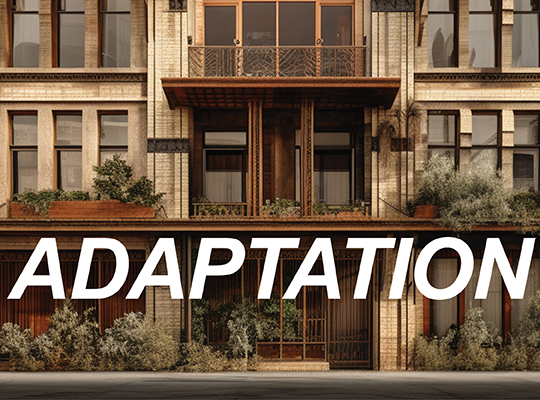
Adaptation aims to explore the potential of repurposing existing heritage structures in Melbourne as multi-residential developments in response to the current housing crisis in Australia. The studio will challenge students to develop innovative design solutions that focus on designing across a range of scales, from door handles to façade systems in response to existing fabric, while questioning the need for building new housing developments that require significant resource inputs and can contribute to urban sprawl. By combining the principles of adaptive re-use, sustainability, and social responsibility, students will have the opportunity to reshape Melbourne's urban fabric and contribute to a more inclusive and sustainable future.
Students will conduct comprehensive research on adaptive re-use, the housing crisis in Australia, and sustainable design strategies. They will analyse case studies, theories, and relevant literature to inform their design proposals. Students will explore how adaptive re-use can foster community engagement, preserve cultural heritage, and create vibrant and inclusive neighbourhoods.
Studio Outcomes
Students will delve into the principles and methodologies of adaptive re-use, focusing on the historical, cultural, and architectural significance of heritage buildings in Melbourne. They will examine successful case studies from around the world, analysing the challenges and opportunities associated with adaptive re-use projects.
To address the housing crisis in Australia, students will extensively research the issue, with a particular emphasis on Melbourne. They will explore causes such as urban sprawl, affordability problems, and social equity impacts. Encouraged to propose solutions, students will explore how repurposing existing heritage buildings can provide affordable and sustainable housing options.
The studio will highlight the importance of designing across multiple scales. Students will delve into intricate architectural details like door handles and lighting fixtures, as well as broader interventions such as façade systems and spatial configurations. This approach will foster a holistic understanding of how design decisions at each scale contribute to the overall success of adaptive re-use projects.
Studio Leader
Tom Proctor works for Wardle as a designer on projects ranging from residential, educational and commercial development to large scale master planning proposals. During previous employment he has worked on infrastructure and civic projects such as the Melbourne Metro, Perth Stadium, and the WA Museum.
Tom’s design approach seeks to advance architecture’s enduring qualities of space, form, material, and light, in close conversation with the emerging social, ecological, and economic conditions that shape our contemporary experience. Underpinning this approach is a desire to express architecture’s capacity for public discourse, disciplinary experimentation, and dialogue with history - values he considers inseparable from the production of meaningful architecture.
Readings & References
- Jeremy Till, Nishat Awan, and Tatjana Schneider. “Spatial Agency: Other Ways of Doing Architecture”.
- Bie Plevoets and Koenraad Van Cleempoel. “Adaptive Reuse of the Built Heritage”.
- Institute of Constructive Design. “Re-Use in Construction”.
- Liliane Wong. “Adaptive Reuse: Extending the Lives of Buildings”.
- Jane Frances Kelly and Paul Donegan. “City Limits: Why Australia’s cities are broken and how can we fix them”.
- Floris Alkemade, Michiel van Iersel, Mark Minkjan and Jarrik Ouburg. “Rewriting Architecture – 10+1 Actions”.
- The Avery Review: Graham, James. “Climates: Architecture and the Planetary Imaginary”.
- Hyde, Rory. “Architects After Architecture”.
Schedule Mondays 18:15-21:15 and Thursdays 15:15-18:15 in MSD Room 142
Need enrolment assistance?
Stop 1 provides enrolment and other support to Bachelor of Design, Bachelor of Environments and Melbourne School of Design students.