Design Thesis/12
Pub+
Emilio Fuscaldo
Studio Description
Whether you run past them in disgust or run into them with anticipation, the pub is a place where people socialise, communities meet, tribes yell and shout and where performers entertain. Love them or hate them, there’s no denying the influence the humble pub has had on our collective memories and how we experience the built environment.
Since the early days, the pub has continued to adapt and change. In the early 1800’s pubs were simply the extension of someone’s home, where the living areas were given over to the public and beer was brewed ‘out the back.’ In the early 19th century most pubs were owned and operated by women and seen as a ‘home away from home’. Later, pubs became known for the ‘6pm swill’ due to restrictive operating hours. Present day there seems to be a pub to suit every preference, from hipster gastro pub to your ‘local.’
The influence of their physical presence on our streets cannot be understated either. Often pubs were the first building to be erected when towns and cities were established, also being the tallest building located on prominent corners with multiple doorways, large windows and ornate facades. It cannot be denied that the architecture of the pub contributes in both positive and negative ways to the look and feel of our cities and towns.
Pubs in the UK and to a lesser extent in Australia, particularly community owned venues, have become the centre of their communities by moving away from simply providing beer, food & live music. These pubs offer a broader range of experience by either thinking creatively about what they can do to support a community or aligning themselves with community organisations. Examples include, music recitals, theatre, book exchanges, church services, yoga classes, soup kitchens, choir groups and art exhibitions.
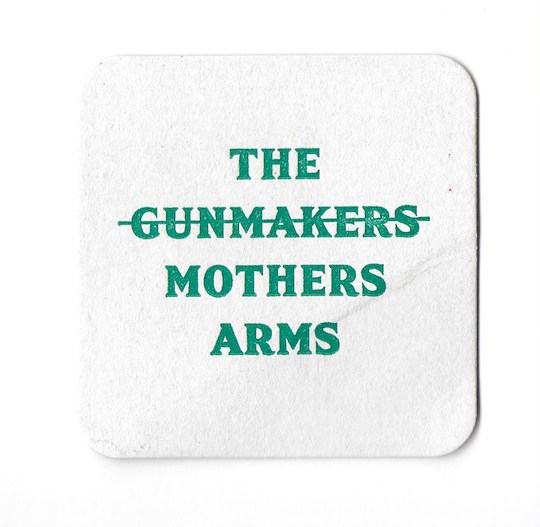
Other pubs have gone even further by providing community assets such as interactive displays that chronicle the history of the area, post offices, convenience stores, bike and IT repair stations, and community gardens. Pub+ is inspired by an ex-public house in East London called the Gunmakers’ Arms, taken over by suffragettes in 1915 and used as a nursery and renamed The Mothers’ Arms.
In this studio I invite students to reflect on their own experiences inside the ‘pub’ and consider how social cohesion might be fostered in a time of persistent social change and climate crisis. Students are to reflect on the pub’s role historically and presently in society (both in Australian and internationally) and propose new and exciting ways the pub can foster new traditions and social cohesion in today’s cultural and environmental context.
Pub+ invites students to explore the social and cultural history of the Australian pub. It then asks students to propose their own version of the pub and do more than simply design a hospitality venue or renovate an existing pub. It’s asking students to be much more ambitious by exploring new, exciting, dynamic and complex programs that go toward alleviating social ills by creating social cohesion.
The pub is perfectly situated, culturally and physically, to tackle the social and environmental issues facing contemporary society such as climate change, social isolation, access to healthcare, racial injustice, inclusivity, etc. The studio is seeking bold and experimental ideas that help the pub once again change and adapt.
Studio Outcomes
Within the studio, I choose material and activities to stimulate students to first consider and then think beyond their own experiences. Through written and drawn exercises to research the connections between architecture and other disciplines such as film, art, literature, landscape and urban design, they are challenged and encouraged to take agency in their own learning process as opposed to simply following directions. We’ll hear voices other than my own, inviting speakers into the studio to present on their craft and different topics.
This studio will start with a social and cultural study of the Australian pub. We’ll look outside of architecture to look beyond our traditionally accepted notions of the pub. Students will then be encouraged to take the lead to build their own brief and select their own site for their project. This will ensure that projects are culturally relevant to the student.
Student’s final projects will propose a creative adaption of an existing pub or an entirely new pub whose principal function is to help create and maintain communities. This could be a pub that critically reflects on alcohol-fuelled violence and notions of gender roles. It could be a pub that is broken into its constituent parts and then reassembled in new and creative ways. The pub could be seen as a mechanism to create and sustain resilient communities facing the climate crisis. OR a pub that negotiates with its complex history as a community asset. The pub’s traditional role in society, loaded with mythmaking, could be unpacked and a new pub proposed which is a truly open, egalitarian and accessible social space.
The studio will encourage students to get out from behind their computer screens and walk the streets. The gathering of primary research will be central to the studio, so be prepared to walk, talk and maybe even grab a drink.
Studio Leader/s
Emilio Fuscaldo is the founder of Nest Architects and has significant experience leading projects across diverse sectors, including single residential, hospitality, retail and education. He has lead design studios at RMIT and The University of Melbourne in both the Architecture and Interior Design departments.
Prior to completing an Architectural degree, Emilio completed an Arts Degree with Honours in Philosophy, including a thesis concerning Environmental Ethics. He is passionate about the power of collaboration and is a strong advocate for environmental sustainability and inclusive design in all projects. To Emilio, being an architect is an opportunity to change behaviours and communities for the better.
Readings & References
- Diane Kirkby, Tanja Luckins, Chris McConville, The Australian Pub, UNSW Press, 2010
- David Knight and Cristina Monteiro, Public House: A Cultural and Social History of the London Pub, Open City, 2021
- Spongberg, M., 1999. Australian Women's History. Women's History Review, 8(2), pp.385-386. https://www.tandfonline.com/doi/pdf/10.1080/09612029900200206
- ABC Radio, RN, Beyond the ladies lounge, Broadcast Sun 24 Feb 2008 @ 2:00pm (see citation below for the actual book being discussed): https://www.abc.net.au/radionational/programs/archived/hindsight/beyond-the-ladies-lounge/3295872
- Kirkby, D., 1997. Barmaids: A history of women's work in pubs. Cambridge University Press.
- Wright, C., 2014. Beyond the ladies lounge: Australia's female publicans. Text Publishing.
- The Australian pub was more than just a place to drink: https://www.abc.net.au/radio/programs/overnights/the-aussie-pub/12270772
- The local: the history of the Australian pub: https://www.abc.net.au/radio/programs/nightlife/the-local-a-history-of-australian-pubs/10764976
- Australian Pubs through our History: https://www.abc.net.au/radio/programs/overnights/australian-pubs-through-our-history/7728746
Schedule Tuesday 3:15 pm - 6:15 pm MSD Bldg Room 142 and Friday 12:00 pm - 3:00 pm MSD Bldg Room 142
Need enrolment assistance?
Stop 1 provides enrolment and other support to Bachelor of Design, Bachelor of Environments and Melbourne School of Design students.