D/10
Future Matters
Laura Mártires
Studio Description
‘Cities are the mines of the Future’
Jane Jacobs
‘Buildings are responsible for 40% of global carbon emissions, when considering both operational and embodied carbon. Whilst operational carbon currently represents a larger proportion of total emissions, as energy efficiency in building increases and energy sources become less carbon intensive, tackling embodied carbon is now critical.’ (Dark Matter Laboratories)
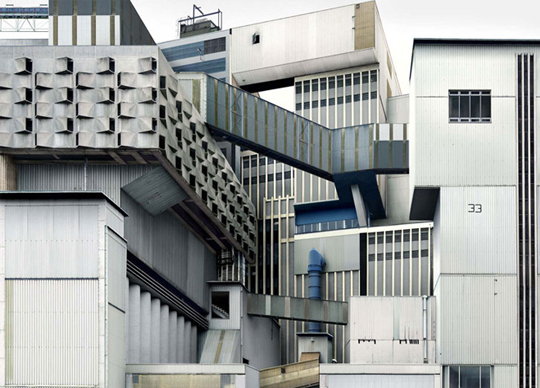
The studio will examine the relationship between building components and the architectural object and begin to test how the idea of ‘mining the city’ can result in the production of new approaches to reuse, recycle, and reconfigure existing building material stock. This shift in design approach stems from the urgency in tackling our extractive approaches in the building industry and the need to rethink a new material and architectural aesthetic.
Arguably architecture is always an inflection on the field of matter, but in this new condition our role as editors rather than creators becomes more explicit.
These ideas will be tested through acts of scoping, indexing, assessing, and reusing existing building stock and the focus of these investigations will take place on the Parkville campus as your ideas will be explored through the design of a new architecture school. THIS school.
Your brief is to redesign an upgrade to the MSD reutilising as much of its building components as possible. The challenge is material and formal, but also socio-cultural: What kind of learning environment will emerge in the future? What kind of school do you want and need? What is the future of the profession and how will it be taught 50 years from now?
This studio will ask you to critique the current educational building typology and rethink how one might learn in the future. Bold and radical ideas are welcomed.
More broadly the studio will examine emergent design technique, both digital and analogue as a means of working with and acting upon existing fields of matter and material – both through editing the existing and speculating through the architectural element to the scale of architectural typology.
Studio Outcomes
Students will be tasked to design a medium scale educational building on the site of the current MSD Glyn Davis building. The studio will require students to re-think the role of public educational architecture for future Melbourne and develop ideas based on their research, analysis, critique and speculation.
The studio will focus on the procedural aspects of design and students will be asked to follow a series of incremental tasks leading to their final resolved design.
The tasks will increase in scale and complexity, focusing initially on the cataloguing and indexing of building components, followed by a small ‘folly’ project testing prototypical ideas for the reuse of certain material components. Students will then analyse the current existing conditions via a ‘hands-on’ approach to gain a deep understanding of the material and programmatic workflows of the building and how to modify, cull or expand them in their projects. The highly structured first half will set students up for a clear understanding of the site and the conceptual framework of the studio.
During the second half of the term students will develop their major projects through the further study of precedent and drawing iteration. They will develop a critical response to their mid-semester resulting feedback and incorporate learning outcomes into their design.
Studio Leader
Laura Mártires is a Lecturer in Architectural Design at the University of Melbourne and a Partner in Melbourne based architecture practice Common Architecture Design & Research.
She is interested in cities and how urban infrastructure, form or fabric can inform particular design processes. Her current investigations focus on emerging design, modelling and visualization techniques utilising gaming engine software to explore how we might change the way we represent architectural ideas in a digital and/or virtual environment.
These ideas have been pursued at different scales through practice where each project is seen as a unique opportunity to create spatial complexity from seemingly abstract notions of urbanity, cohabitation or socio-economical factors. The goal as a practitioner is always to create unique, complex and beautiful spaces that work as a connective platform between the context they’re inserted in and their occupants.
Readings & References
Corner, J., ‘The Agency of Mapping: Speculation, Critique and Invention’;
Dunne, A. and Raby, F., ‘Beyond Radical Design’ in Speculative Everything;
Young, L., ‘Planet City’ (excerpts);
Koolhaas, R., ‘Junkspace’;
Johar, I., Darkmatter Labs (specific projects);
Woods, Lebbeus, ‘Radical Reconstruction’;
GXN ‘Resource blokken’;
‘Future Cities Laboratory’ Vol. 1 + Vol. 2 Excerpts, Lars Muller Publishers;
Further resources will be provided throughout the course of the semester.
ABPL90438 Design Studio D is an Early start subject. An in-person Studio Presentation Day event will be held in the Hercus Theatre (L05), David Caro Building from 1pm-2pm on Tuesday 16th July followed by one-hour Q&A Session with Studio Leaders and Subject Coordinators in the MSD building. The Studio Ballot will be held online at the beginning of O-week, opening from 3pm Tuesday 16th July and closing at 3pm Wednesday 17th July. The outcome of Studio Allocation will be announced on Canvas before the end of Friday 19th July. There will be subject preparatory online work to be completed during this period before the semester commencement.
Schedule:
Monday 3:15-6:15pm in MSD 213
&
Thursday 12:00pm-3:00pm in MSD 142
Need enrolment assistance?
Stop 1 provides enrolment and other support to Bachelor of Design, Bachelor of Environments and Melbourne School of Design students.