Future Art Museum
Future Art Museum
Xiaojing Sang
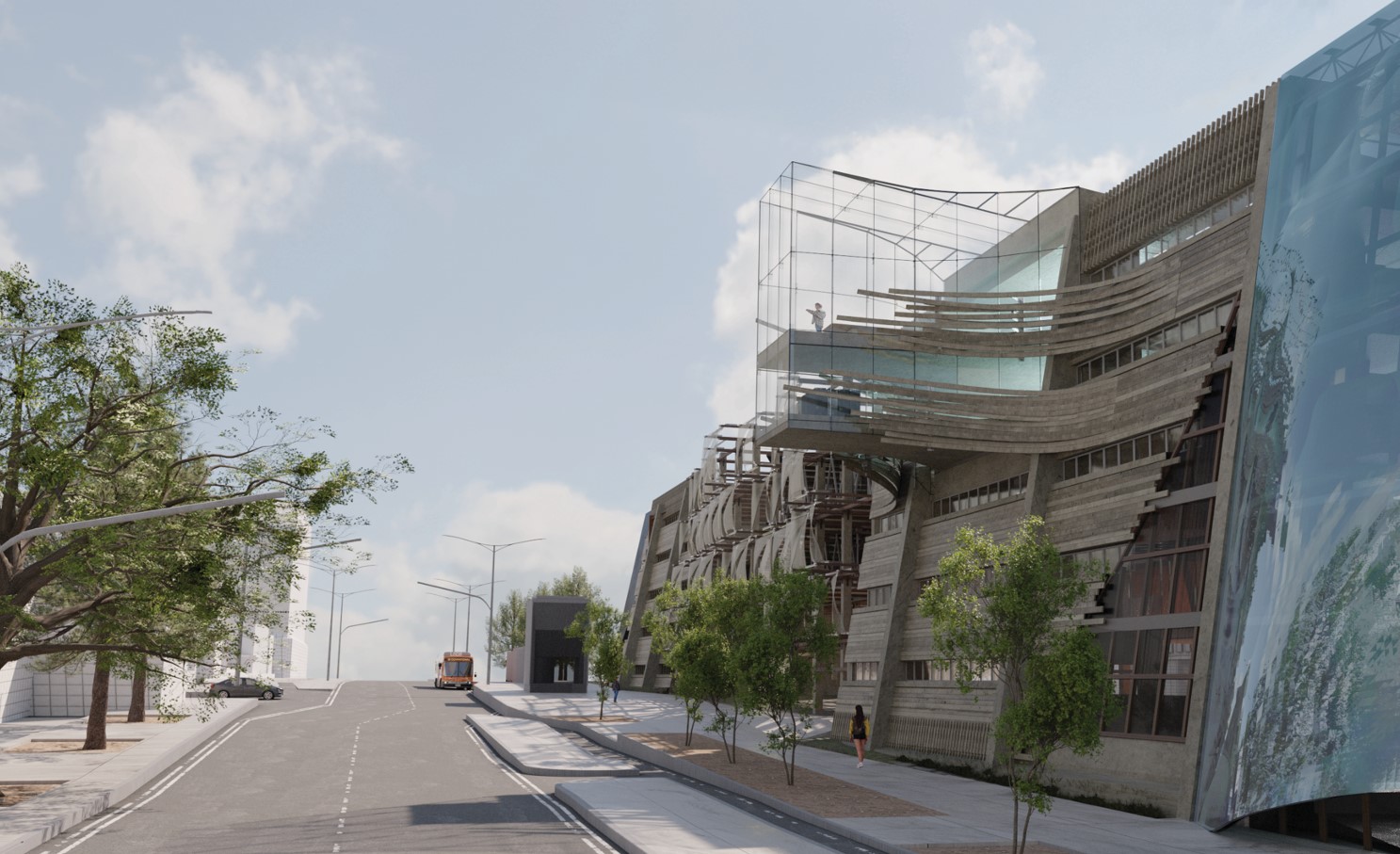
Studio Description
This is a joint design studio of Melbourne University and Tongji University.
Today, what is the significance of the existence of art museums? When we occasionally pass by an art museum, will there be a voice asking, did we create it, or did it shape us? Art museums often connect different time and space through the exhibits they display, allowing us to understand what the world is like, giving people the opportunity to think clearly in complex environments in daily life and study, and helping people think about the future. The role of art museums may go far beyond being a carrier of social and cultural communication, it is also an integral part of urban social and cultural life. A creative and inclusive socio-aesthetic museum also represents a city’s past and future to a certain extent.
In this research and design topic, students will explore the drive of art museums. Through ideological analysis of the existence of artworks and research on the forward-looking attributes of art, reason about the concreteness and neutrality of future art museums from a deeper level. In addition, critical thinking about specific spatial forms is also an important part of this design course. Students can choose the site in Shanghai or Melbourne to conduct specific design analysis, it is also necessary to simultaneously study and infer design techniques and technologies with more cutting-edge methodologies. Active experimental design techniques could be used to overcome strict spatial constraints or perhaps break the single definition of traditional place making, while expand them into cultural codes with multiple interpretations. Either way, you'll be encouraged and inspired in this design course.
(Studio Image by Jesse Hogben - MSD Thesis 2024)
Studio Outcomes
The exploration process will combine thesis writing and architectural design. In this studio, students can make their own judgments based on their own redefinition of the architectural site and give new life to the architecture as an art museum. Verification of research results should be reflected in the final design results. Design to prove thinking, and thinking to pave the way for design, are the key to this topic.
Studio Leader/s
Xiaojing Sang is an academic based research driven designer. With a background in both architectural design and urban design, since 2006, her practical design experience covers various types and scales of projects. In her teaching model, students will be inspired and find their potential to the greatest extent possible, laying the foundation for future practice or research. Xiaojing believes ground break design comes from breakthrough thinking, she carries this belief on thesis design teaching since 2020.
Readings & References
To be provided in class.
Schedule:
Monday 9am-1pm, MSD 142
Tuesday 1pm-3pm, MSD 142
Need enrolment assistance?
Stop 1 provides enrolment and other support to Bachelor of Design, Bachelor of Environments and Melbourne School of Design students.