Open: Phenomena
Open: Phenomena
Ben Lau
Studio Description
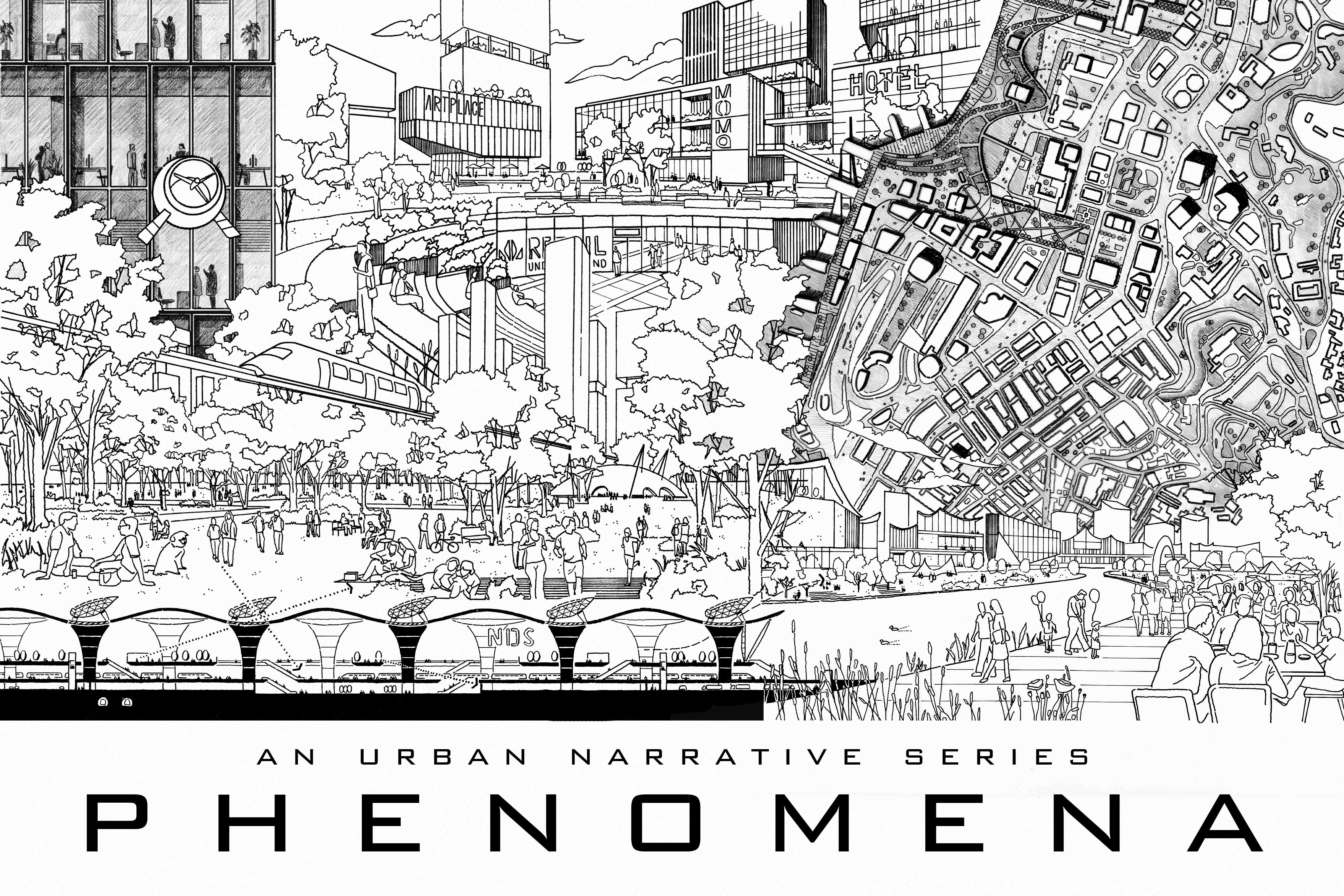
Architecture not only shapes our cities but also creates stories and experiences that extend far beyond their physical forms and functionality. By intertwining form, space, light, material, and colour, phenomenological experiences foster our sense of belonging to a place. As part of the Urban Narrative series, this studio explores how storytelling drives architectural design through discovering the essence of the environment.
Terry Farrell describes architecture and cityscape as a tangled bank. PHENOMENA is a cross-disciplinary studio that explores the intersection of architecture and urban design, examining how they can be intertwined. Through designing monumental and complex public buildings, students will learn how to create context-sensitive and culture-centric architecture that evokes our feelings and memories.
In this open studio, students will design public architecture interweaving with various phenomenal elements. Students can determine the site (project location), the audience (target users), and the functional brief (program) of their projects to suit their proposed research topics.
Studio Outcomes
The studio will be structured in three parts - research, concept creation, and design development. The studio outcomes include masterplanning, architectural concept and design, design narrative, architectural planning, and communication skills.
In the research stage, students will develop their design brief through architectural theory and precedent research and an in-depth understanding of the proposed field. Works from phenomenal architects such as Louis Kahn, Peter Zumthor, Steven Holl, and Tadao Ando will be studied as part of the students’ learning.
During the concept creation stage, students will develop their masterplan through morphological mapping and small group discussions. Using physical study models as a key design tool, students will learn how to generate architectural concepts and design narratives while emphasizing contextual and cultural responses.
In the design development stage, key design principles relating to architectural planning for complex buildings will be explained. The engineering support session provides technical structure advice to students. Visual and verbal presentation techniques will be explained, and guidance will be provided for the final presentations.
Studio Leader/s
Benjamin is an experienced designer in architecture, master planning, and urban design. Previously a Director at Farrells, (2000-2022) established by internationally renowned architect-planner Terry Farrell, Benjamin led many designs of award-winning projects worldwide.
From the 100-storey skyscraper KK100 in Shenzhen to the Vattanac Capital’s culturally responsive design in Phnom Penh, Benjamin’s design solutions are innovative and multi-faceted, through research and design explorations.
As a passionate urbanist, Benjamin’s design philosophy is rooted in contextual sensitivity and an intimate understanding of ‘place’. With many published drawings, Benjamin is a proficient narrative designer who can communicate complex ideas with exceptional critical thinking skills.
Readings & References
Peter Zumthor, Atmospheres: Architectural Environments. Surrounding Objects, Birkhauser, 2006
Peter Zumthor, Thinking Architecture, Birkhauser, 2010
Steen Eiler Rasmussen, Experiencing Architecture, MIT Press, 1964
Steven Holl, Juhani Pallasmaa, and Alberto Perez-Gomez Questions of Perception: Phenomenology of Architecture, William Stout Publishers, 2007
Terry Farrell, The City as a Tangled Bank, John Wiley & Sons, 2014
Architecture by Louis Kahn, Peter Zumthor, Steven Holl, and Tadao Ando
Schedule:
Monday 9am-11am in MSD 140
Thursday 9am-1pm in MSD 140
Off-site Activities:
TBA
Need enrolment assistance?
Stop 1 provides enrolment and other support to Bachelor of Design, Bachelor of Environments and Melbourne School of Design students.