Southeast Asia Travelling Studio
Singapore and the Philippines
Studio Leaders: A/Prof Derlie Mateo-Babiano & Dr Xiao Ma (MSD)
Applications close: 02 October 2026
Introduction
Urbanisation and densification are the two most powerful processes that impact the quality of life in cities. While cities offer better opportunities through education, healthcare, employment and transport, poorly planned urbanization reinforces the already present challenges of poverty, informality, affordable housing, climate justice, and inequity.
While one billion urban residents lack access to secure basic services, including affordable housing, urban informality continues to challenge current approaches to urban planning, placemaking and development.
This subject examines the placemaking process in relation to the long-term benefits of place by strengthening the relationship outcomes between place, self, community and nature. The subject is based on case-studies. It provides lectures and practical exercises on the critical steps of placemaking. Topics include place governance and community engagement, place evaluation, integrating nature into place and the economics of place etc. Different models for placemaking will be explored such as tactical urbanism, guerrilla urbanism, creative placemaking and regenerative placemaking.
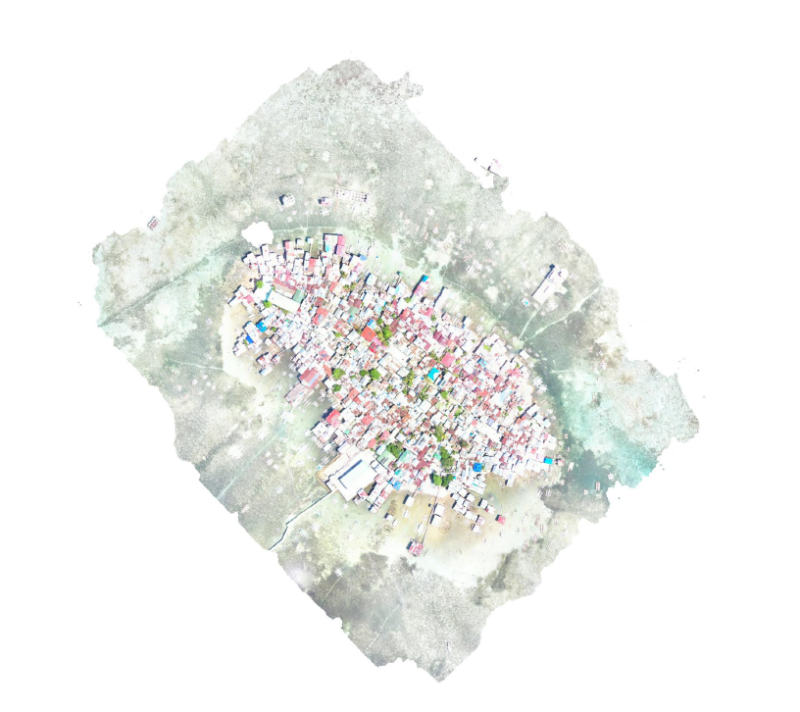
The Southeast Asia Travel Studio will visit Singapore, Cebu and Leyte Philippines, providing students with intellectual and creative tools to explore and explain the urban placemaking processes, practices and policies, including land use and transport interaction that give rise to slum formation and the persistence of slums.
In the studio, students explore place-based strategies to develop nature-based urban solutions, rooted in Indigenous knowledges that support climate change adaptation and health and wellbeing of local residents, increasing place attachment, sense of belonging, sense of place, biophilia, and ecosystem services, which is linked to positive citizenship, health and safety.
Approximate costs to students
This subject has international fieldwork component. Students will be required to cover travel (airfare), accommodation and food costs. The approximate cost is estimated at $5,480 per person.
Travel Location: Singapore, Cebu and Leyte Philippines
Funding Available:
Participating students will receive a one-off subsidy of $500 from the Faculty utilised towards student’s accommodation costs.
Dates:
- Applications close: 02 October 2026
- OH&S information session: TBC
- Study Period Start Date: 23rd November 2026
- Final submission/presentation: 4th January 2027
- Teaching Start Date: 23rd November 2026
- Subject census date: 4 December 2026
- Overseas travel dates: 25th November 2026 - 10th December 2026
- Teaching End Date: 14th December 2026
For further information please see subject handbook page: https://go.unimelb.edu.au/jj72
To Apply:
This subject is a quota subject and places are limited. Students may provisionally enrol via the Student Portal, but places are not guaranteed. You will be notified in writing by Stop 1 if you are enrolled.
Selection criteria: Send a maximum of 500-word EOI (Expression of Interest) to the subject coordinator imateo@unimelb.edu.au not later than 02/10/2026.
Include answers to the questions below in your EOI:
- What (knowledge and/or skill) do you think you will learn by participating in the travelling studio?
- How do you think this knowledge/skill will be useful in your future career? What (knowledge and/or skill) do you think you will bring to the travelling studio?
For detailed information on the quota subject application process and due dates, refer to the EDSC Quota Subjects webpage: http://edsc.unimelb.edu.au/quota-subjects
Need enrolment assistance?
Stop 1 provides enrolment and other support to Bachelor of Design, Bachelor of Environments and Melbourne School of Design students.